Glass Jar or Tin Canister for Dry Pantry Goods?
Glass jar or tin canister for dry pantry goods? Compare visibility, light, weight and cupboard fit to choose a container that suits your shelf.
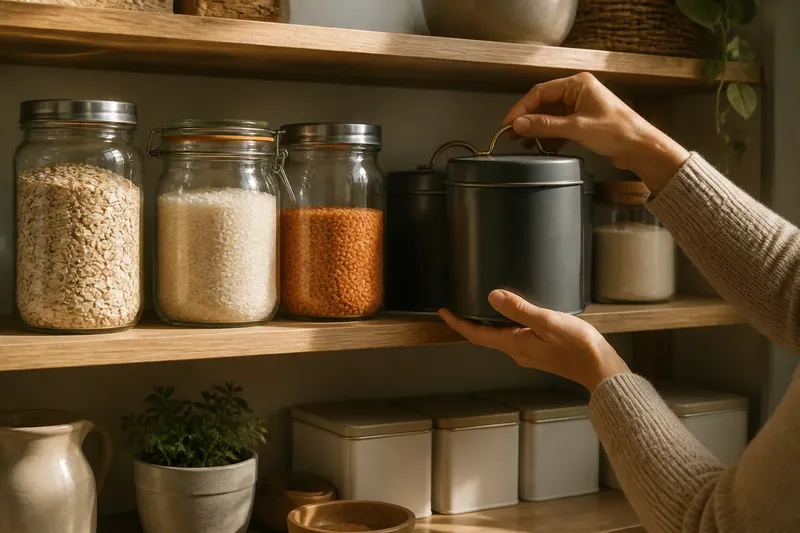
A glass jar or tin canister for dry pantry goods works best when its material suits both the food and the place you keep it. Glass makes contents easy to see, while an opaque tin blocks light and can be easier to lift; neither advantage matters much if the container is awkward to open or will not sit properly in the cupboard.
Visibility makes stock easier to read
A clear glass jar turns the pantry shelf into a quick visual inventory. You can see whether oats are running low, distinguish rice from lentils, and check for clumping without opening the lid. A broad, straight-sided jar is especially legible: its contents show through a larger area than they do in a narrow-necked bottle.
That visibility can also make a shelf look busy. Mixed colours and textures may be useful reminders, but jars in different shapes and fill levels create a more varied view. If you prefer a quieter cupboard, a tin hides the contents and leaves the outside surface available for a simple label.
Labels are useful on either material. Write the food name clearly, and add a date or cooking note if that helps you use older stock first. A paper label can be moved or replaced; a permanent marker on a tin is less flexible. On glass, a removable label keeps the jar reusable for a different ingredient.
Light exposure depends on where the container sits
Glass lets light reach the food; a tin does not. That difference matters most when the container stands on an open shelf beside a bright window or under strong kitchen lighting. An opaque canister shields its contents, whereas a glass jar leaves them exposed to the light reaching that spot.
A cupboard changes the comparison. If the door stays shut and the shelf is not lit, visibility through the glass is less likely to be a deciding factor for light exposure. You can instead choose the jar for easy checking, or the tin if you want the contents concealed. Clear glass is not a substitute for a well-fitting lid, and opacity alone does not make a container suitable for every pantry food.
Say you keep flour on an open shelf that gets afternoon sun, and already own both a clear jar and a lidded tin. Moving the flour into the tin and placing it away from direct light would reduce the light reaching it; a label on the front would keep the contents identifiable. That choice addresses the shelf conditions without treating the container as a cure for poor storage.
Weight changes how a full container feels
An empty glass jar can seem light, but the glass adds to the load once it is filled. A tin is often easier to lift when full, which can help if the container sits above shoulder height or needs to be carried from shelf to worktop. The exact feel depends on the shape, material thickness and amount of food inside.
Think about the movement, not just the object. A jar with a narrow neck may require more effort to pour from, even if it is easy to pick up. A wide-mouthed canister may be simpler to scoop from but harder to tip neatly. Handles, lids and rims also affect grip and control.
If a heavy jar is stored high, consider whether you can lift it comfortably without twisting or stretching. A lighter tin may suit that position better; a stable glass jar may be easier to manage on a low, accessible shelf. Choose a container you can move with the food inside, rather than judging it only while empty.
Cupboard fit is about shape as well as capacity
A container’s stated capacity tells you how much it can hold, not whether it will fit your shelf or suit the way you use the food. Measure the usable shelf space, including the room needed to reach in and lift a lid. Check the opening against the scoop or measuring cup you normally use.
Square-sided tins can make orderly use of a straight shelf, while rounded jars leave small gaps between neighbouring containers. Yet shape alone does not settle the choice: a wide tin may occupy more depth, and a tall jar may foul a shelf above it. Look at the shelf height, depth and access together.
- Check that the filled container can be lifted out without catching on the shelf above.
- Leave room for your hand to grip the sides or lid.
- Match the opening to the utensil used for scooping.
- Notice whether neighbouring containers block a lid from opening fully.
- Choose a shape that can stand securely where you plan to keep it.
These checks often favour using a container you already own. If it fits the shelf and is comfortable to handle, replacing it purely to make the cupboard look uniform may solve no practical problem.
Which container suits a particular pantry shelf?
Is glass or tin better for flour?
Either can suit flour if the lid fits well and the container is easy to scoop from. A tin can be useful on a bright open shelf; a broad glass jar makes the remaining flour easier to see in a darker cupboard.
Can a glass jar sit on an open shelf?
It can, but consider how much light reaches that spot and whether the filled jar is stable and manageable. If it sits in strong light, an opaque container or a less exposed shelf may be a more suitable choice.
Does a tin keep dry food fresh for longer?
Not simply because it is made of tin. The lid and the container’s suitability for the particular food matter; check the manufacturer’s instructions where they apply.
Should I decant pantry goods into matching containers?
Matching containers can make labels and shelf arrangements easier to scan, but they are not essential. Use them when they improve access or visibility, rather than decanting food into a shape that is harder to fill, pour from or clean.
Let the shelf decide the material
For a dark, easy-to-reach cupboard, a clear jar offers a straightforward way to see what remains. For an exposed shelf or a high position, an opaque, lighter tin may be more comfortable and keep the contents out of view. If neither material suits the space, changing the shelf position can matter more than buying another container.
When choosing a glass jar or tin canister for dry pantry goods, start with where it will live and how you will get food out. Then weigh visibility against light exposure, consider the full container in your hands, and check the fit against the actual shelf. A useful pantry container is one that makes the food easy to identify and reach without becoming a nuisance in daily use.