A Rainy-Day Reset for the Reusable Shopping Bag
A rainy-day reset for reusable shopping bags helps you sort, fold and place the ones you own so the right bag is easier to remember next time.
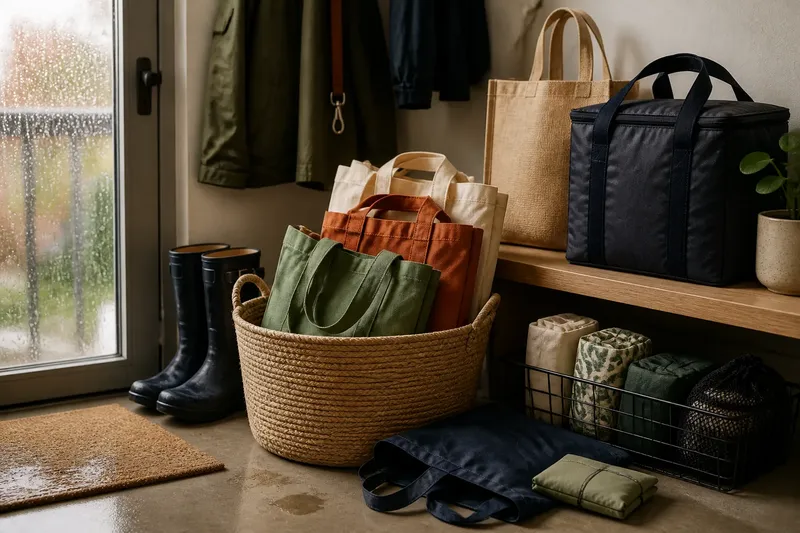
A rainy-day reset for reusable shopping bags works best when it starts with the bags already at home, not with a new organiser or another purchase. Gather the bags from the hallway, car, coat pockets and kitchen, then decide which ones belong near your usual route out. The aim is simple: make the useful bags visible, manageable and easy to return to their place.
Choose the routine that fits your household. A person who walks to the shops needs a different landing spot from someone who drives, and a collection of bulky insulated totes needs a different folding plan from a few thin fabric bags. There is no need to make every bag match or fold in the same way.
Choose a reset for the way you shop
Think about the point where you most often remember a bag. If you usually think of it while putting on your coat, a hook or basket by the door may help. If the reminder comes when you reach the car, keep a small group in the boot or beside the keys. The right location is the one you pass before leaving, not the one that looks neatest in a photograph.
- You walk to the shops: Keep a few compact bags close to the door, in a coat pocket or in the bag you carry every day. This suits short trips because the bags are within reach as you leave.
- You drive most often: Store a small, contained group in the car, with another bag near the door for shops visited on foot. This avoids carrying the whole collection back and forth.
- You shop with children or share errands: Use a common landing place that everyone can see, such as a low basket near the exit. A shared place is easier to maintain than relying on one person to remember each bag.
- You have bulky or insulated bags: Give them a separate place from thin foldable totes. Their shape can make them awkward to squash into a small bundle, and separating them keeps the lighter bags accessible.
- You have only a few bags: Keep them together without adding a special container. A simple hook, shelf or folded stack may be enough.
Say you usually walk to a nearby shop and find bags scattered between a kitchen drawer and two coat pockets. You could gather the everyday totes, fold the ones that fold easily, and place them in a basket beside the shoes. The expected visible result is one predictable place to check before leaving; the bags kept in coat pockets can remain there if they are useful on spontaneous trips.
Sort the collection by what it does
Empty every bag and separate the contents before deciding where each one belongs. Receipts, reusable produce sacks and forgotten shopping lists can make a bag feel cluttered even when the bag itself is useful. Put those items where they belong, then group the bags by their role rather than by colour or material.
A useful set of groups might include everyday totes, larger bags for a substantial shop, insulated carriers and small produce or bottle bags. These are practical distinctions: they help you choose a bag for the errand without searching through a mixed pile. If several bags perform the same job, keep the ones you reach for most readily and decide whether the rest deserve storage elsewhere.
Do not discard a bag solely because it is creased or has a different shape from the others. Consider whether its handles feel comfortable, whether it opens easily and whether its capacity suits an errand you actually make. A bag with a narrow base may work well for a few items but be awkward for groceries that need to sit flat. The useful question is not whether it looks uniform, but whether it has a clear role.
Fold only the bags that benefit from folding
Folding can save space and make a soft tote easier to carry as a spare, but forcing every bag into a tight shape can add needless work. Fold thin fabric bags loosely enough to open without wrestling with tangled handles. If a bag has a sewn-in pouch, use it only if packing it away is straightforward; the pouch is not a requirement for a good storage routine.
For a bag without a pouch, smooth it on a flat surface, bring the sides towards the centre and fold it into a manageable rectangle. Then fold the handles alongside the body rather than knotting them. A loose roll can suit a bag that lives in a car, while a flat fold may sit more neatly in a drawer or basket. Choose the form that makes retrieval easiest.
Keep structured, insulated or stiff-bottomed bags open or lightly folded if compressing them makes them awkward to store. They may fit better on a shelf or in the boot than in a crowded drawer. A routine is easier to repeat when each bag has a storage form suited to its construction.
Give clean, damp and worn bags different treatment
Before returning bags to their usual place, check for crumbs, spills and damp patches. Shake out loose debris and deal with visible dirt in a way suited to the bag’s material. Let a damp bag dry fully before folding it into a closed space; trapped moisture can leave an unpleasant smell or affect nearby items.
Fabric, coated and insulated bags may have different care requirements, so check the care label or maker’s instructions when they are available. Avoid assuming that every reusable bag can go through the same cleaning process. For a bag that needs repair, such as one with a loose seam or a damaged handle, keep it apart from ready-to-use bags until you have decided whether it is suitable to mend or should be retired.
Make the repair decision based on the part that has failed and the job the bag needs to do. A small snag away from a handle may be manageable, while damage at a load-bearing seam can make the bag unreliable for carrying groceries. If you are unsure whether a repair is sound, use another bag for heavier loads and seek appropriate advice before relying on it.
Where should reusable shopping bags go?
Should bags stay by the front door?
Keep them by the door if that is where you prepare to leave and the bags will not obstruct the entrance. A visible basket or hook can make a quick check part of putting on shoes or picking up keys.
Is it better to keep bags in the car?
A car is a sensible home for bags used mainly during driving errands. Keep the group contained so it does not spread through the boot, and retain a separate option indoors if you sometimes walk to local shops.
How many bags should stay in the everyday spot?
Keep enough for the errands you commonly make, plus a spare if that suits your routine. Put occasional-use or bulky bags elsewhere so the everyday spot remains easy to scan.
What if bags keep drifting around the house?
Choose one return point near the route home and make it easy to use, such as a basket by the door or a hook beside the shopping list. If a bag is routinely left in a different place, consider whether that location is more convenient for the person using it.
Make the return journey part of the routine
The reset will last longer if bags have a clear route back after a shop. When unpacking, place each empty bag in the same temporary spot rather than setting it down wherever there is space. Once it is dry and ready, return it to its assigned place. This small hand-off prevents the collection from scattering again.
It can help to keep one bag accessible for unexpected errands and store the rest as a group. The accessible bag might live in a work tote, near the keys or in a car, depending on how you travel. Avoid filling every pocket and vehicle with bags simply because there is room; a few easy-to-find options are more useful than a dispersed collection.
Revisit the arrangement when seasons or routines change. A rainy spell may make an insulated carrier or a bag with a more secure closure useful, while a shift to more walking may favour compact totes near the door. This rainy-day reset for reusable shopping bags is complete when each bag has a sensible job, a suitable place and a simple way back after use—not when every item is folded identically.